I Traced One Agent Question. The Trace Found Two Things I Forgot to Turn Off.
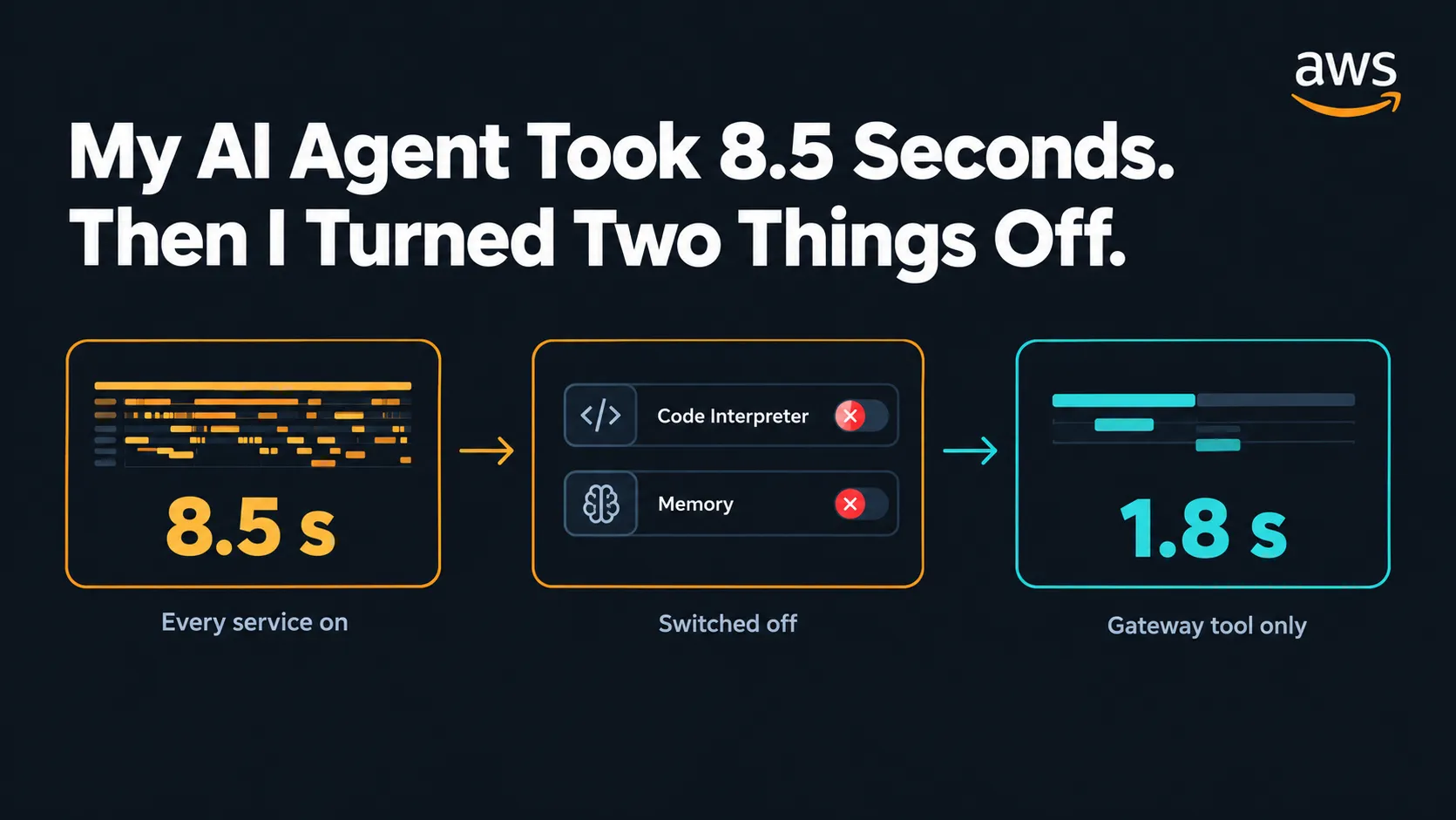
I traced the same agent question twice. With Code Interpreter and memory on, it took 8.5 seconds. With only the Gateway tool left, it took 1.8.

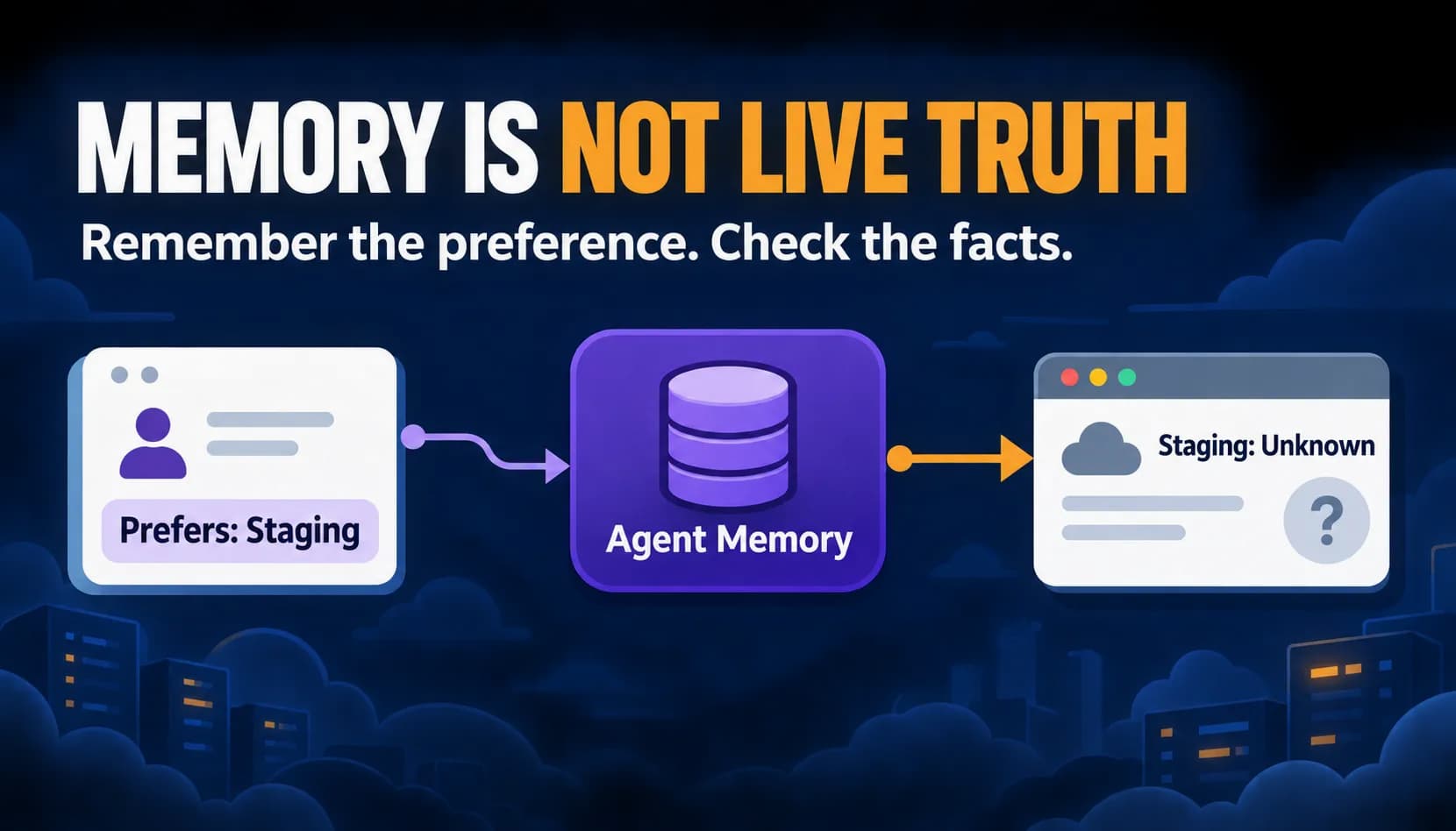
My CloudOps agent remembered which environment I preferred. Then I changed that preference to an environment its deployment tool did not support. The result clarified a useful boundary: memory can preserve context, but current facts still need a current source.
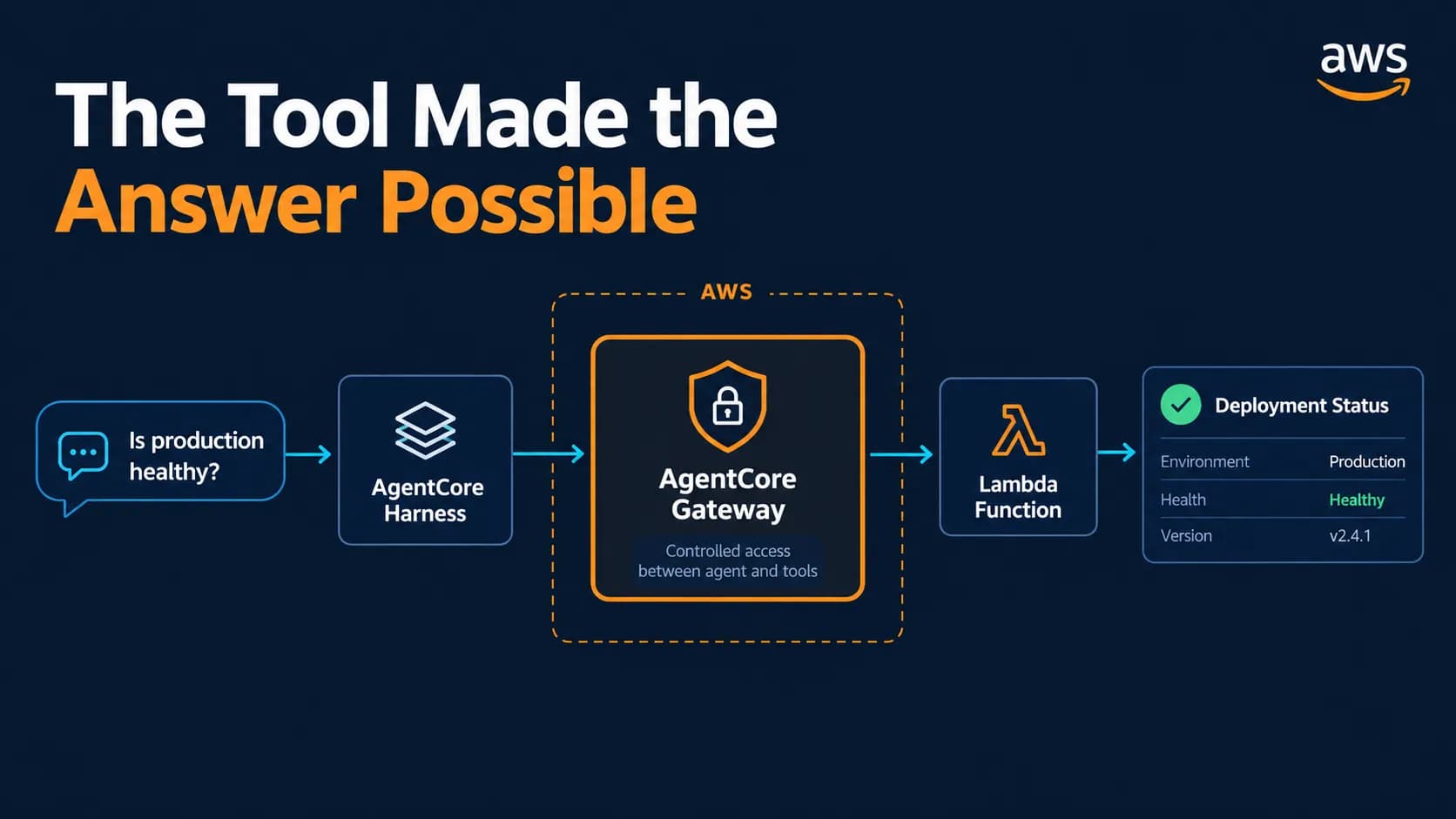
My first CloudOps agent refused to say whether production was healthy because it had no operational data. I added a deterministic Lambda through Amazon Bedrock AgentCore Gateway, tested the complete tool path, fixed a protocol mistake, and learned why a grounded answer is only as reliable as its underlying source.
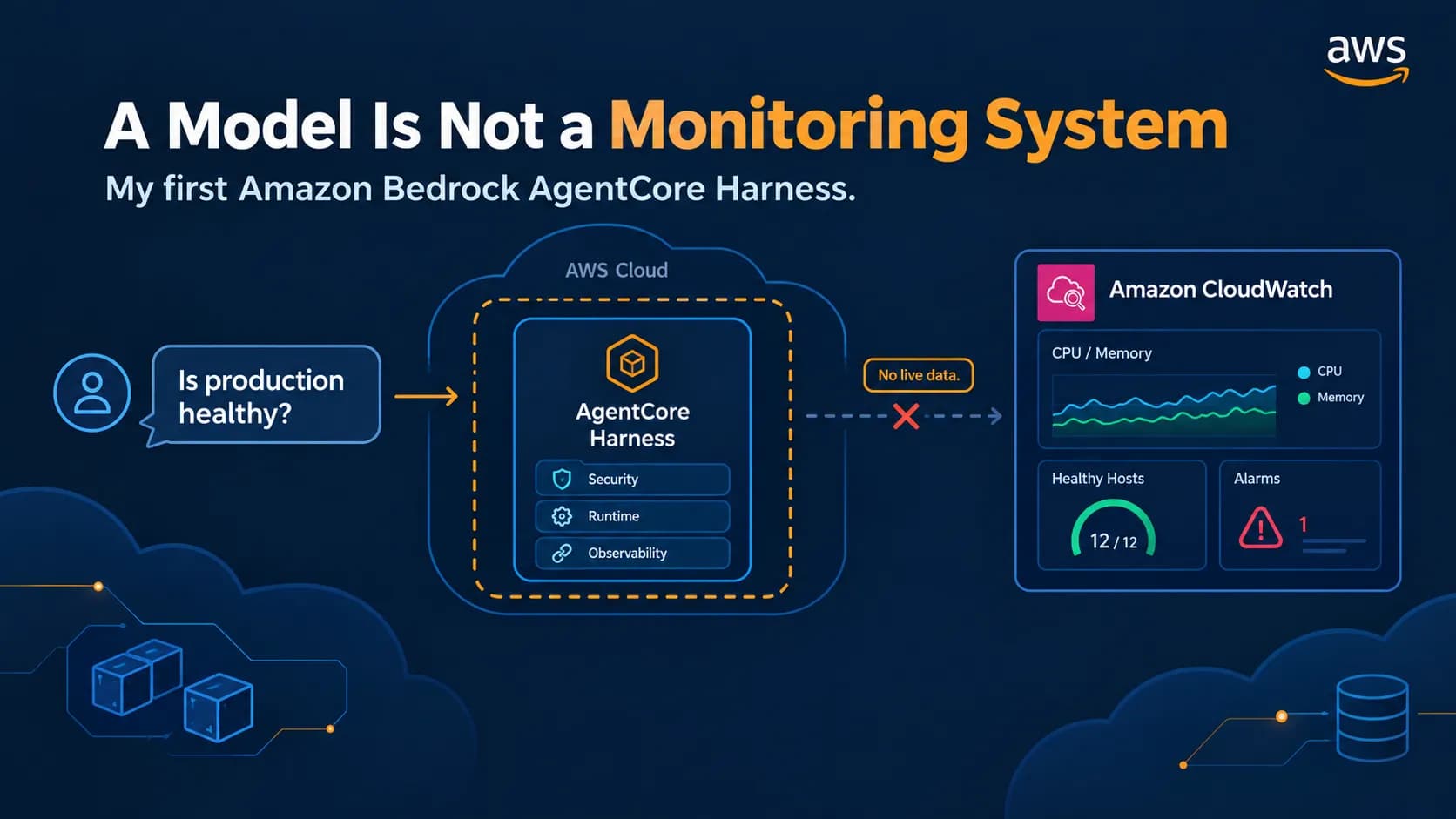
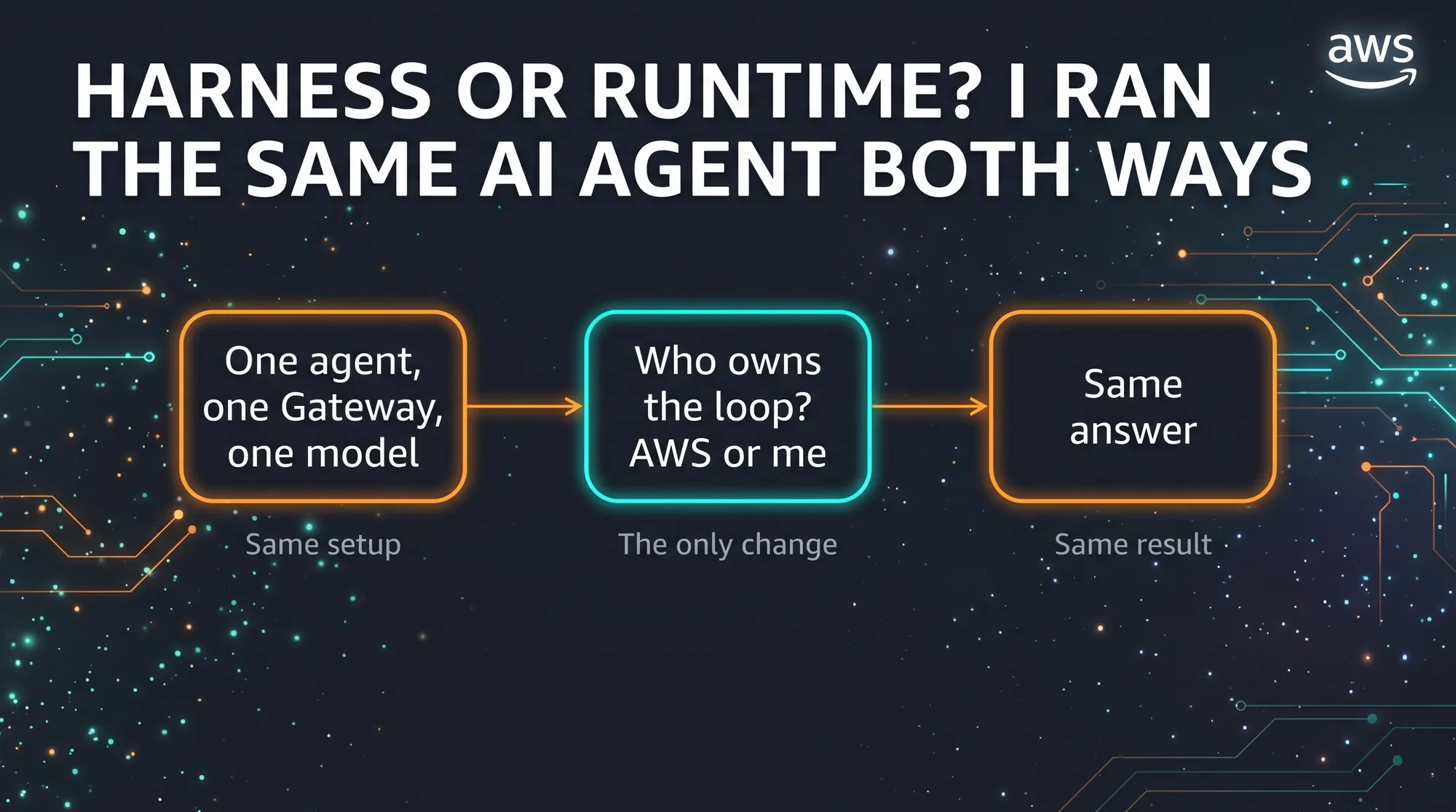
I deployed a managed AgentCore Harness and asked whether production was healthy. Its refusal was the correct result for this experiment: the agent had a model and a prompt, but no authoritative operational data. The deployment and trace made that boundary concrete.

I moved the application and delivery contract from my home k3s server to temporary EKS infrastructure. The workload stayed familiar, but AWS introduced new decisions around networking, identity, compute and load balancing. I tested the complete path, measured drift correction and then removed the environment.
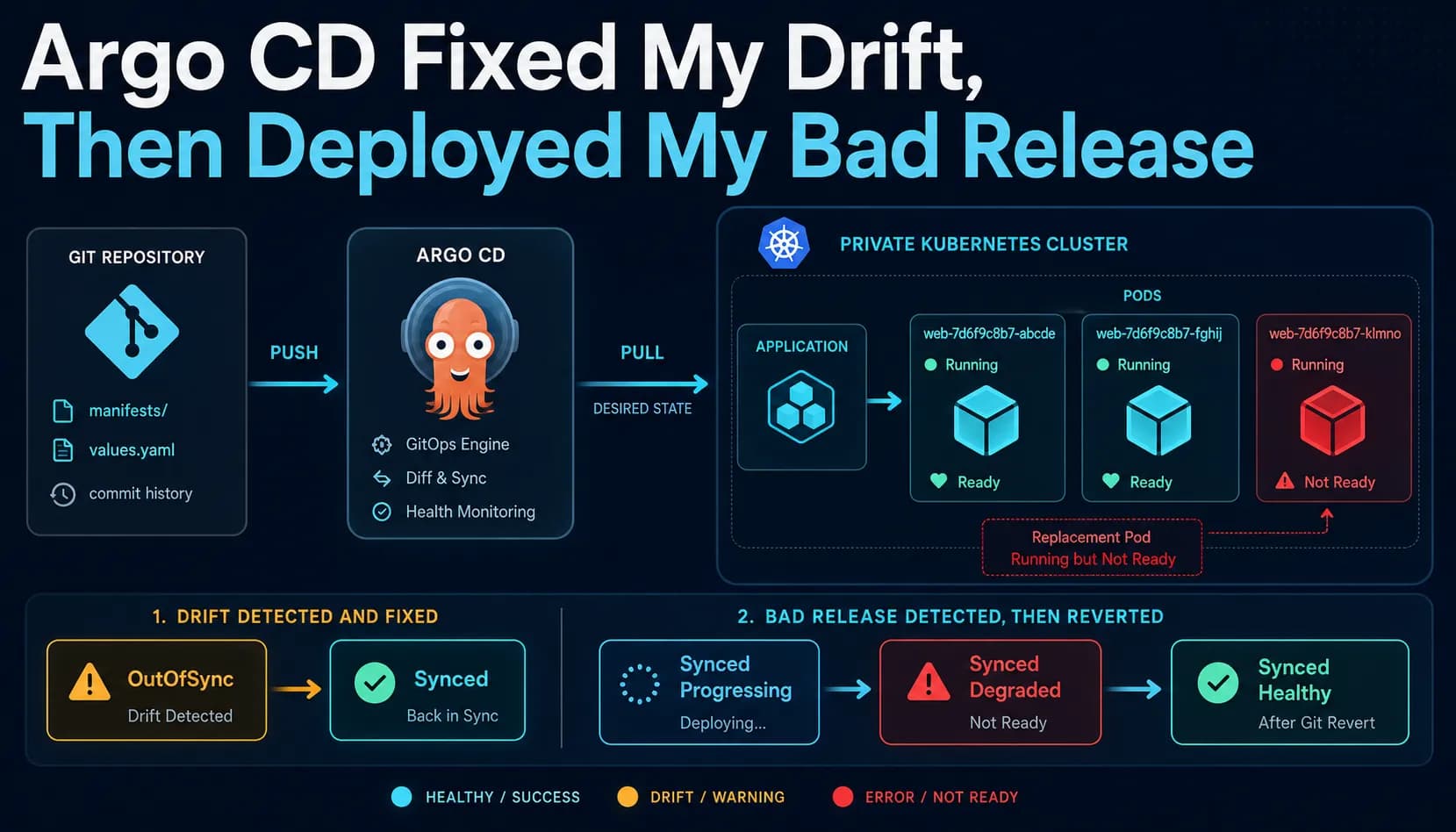
I first built an always-on k3s lab, then discovered that a successful rollback could leave its saved YAML behind. After designing a safer GitOps path, I implemented it and tested three real behaviors: drift correction, a correctly deployed bad release, and durable recovery through a Git revert.
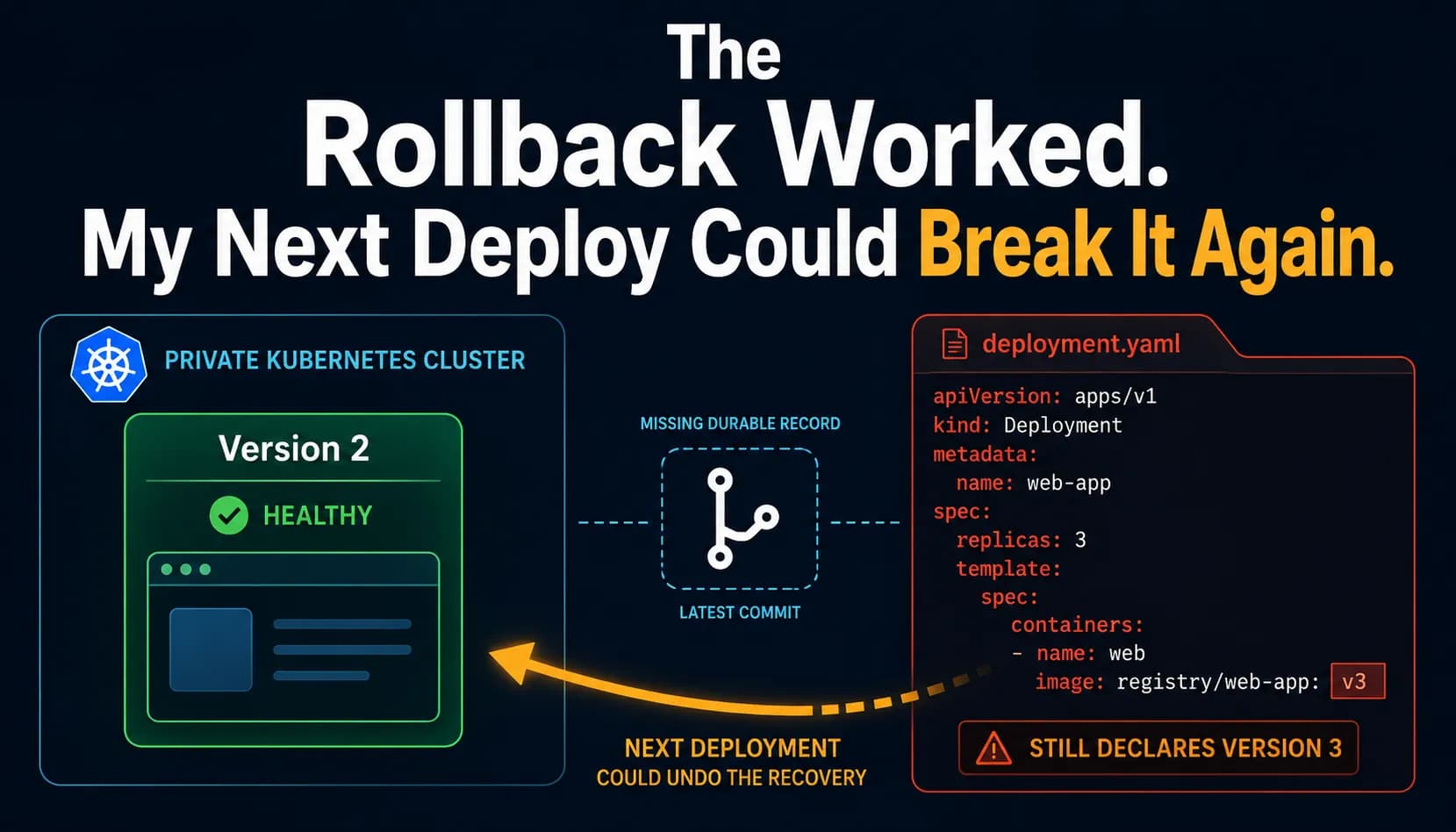
My Kubernetes rollback restored Version 2, but it did not update the YAML that still declared Version 3. I corrected the file manually, then designed a delivery process in which Git recorded the chosen version and the cluster followed it automatically.